


On Earth Day: balancing nature and development in SA’s energy transition
Earth Day gives us a moment to reflect on our relationship with the planet. In the energy sector, that conversation is about carbon emissions and the need for cleaner power.
On the ground, however, behind every renewable energy project there are a series of decisions and trade-offs that shape how a plant fits into its surrounding environment.
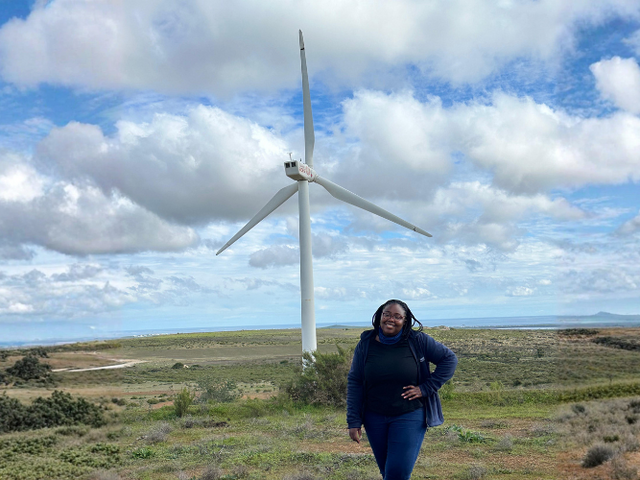
We recently sat down with Nkhensani Masondo, environmental manager at JUWI Renewable Energies South Africa, to talk about what this looks like in practice.
Finding the right balance
Like many in the field, Nkhensani’s path into environmental management wasn’t straightforward.
She initially planned to study law, but a high school job shadowing experience introduced her to environmental management, and that changed her trajectory entirely. She went on to study environmental management, which set her on a path into environmental auditing, public participation and later environmental impact assessments (specifically for housing and commercial developments), before moving into renewable energy.
Today, her role at JUWI sits at the intersection of development and environmental protection.
"It’s really about finding the right balance. Development needs to happen, especially in South Africa, but how do we do it in a way that doesn’t compromise the environment?"
Her work involves overseeing environmental assessments, reviewing specialist studies, and working closely with internal teams across GIS, grid and land. It also means coordinating with a wide range of external stakeholders, from environmental consultants, specialists, government departments to conservation organisations and local communities.
Every project is different
One of the things that drew Nkhensani to renewable energy is the level of complexity and variety it brings.
Unlike other sectors, where projects can follow a relatively standardised process, renewable energy developments are highly site-specific. Each project comes with its own environmental sensitivities, regulatory requirements and stakeholder dynamics.
"You solve one issue and then something new comes up. There’s always something new to learn."
This is part of what makes the work both challenging and rewarding. It requires continuous learning, adaptability, and a willingness to engage with new and often unfamiliar issues.
The regulatory environment is also constantly evolving. Policies change, requirements are updated, and different stakeholders may approach projects in different ways depending on their roles and perspectives. Each project therefore needs to be approached on its own terms, with a clear understanding of the local context.
Where nature and development meet
While renewable energy reduces emissions, each project still interacts with a specific environment, and the local impacts need to be carefully understood and managed.
Some of the most common considerations include birdlife, sensitive biodiversity areas, water resources such as wetlands and rivers, as well as heritage and visual impacts. These factors can influence how a project is designed, where infrastructure is installed, and what mitigation measures are needed.
Birds are a key consideration for wind energy projects. In some cases, mitigation measures such as turbine shutdown systems may be needed to reduce collision risks. These kinds of requirements can have a material impact on project design and cost, and need to be carefully assessed alongside other project considerations.
Water systems and wetlands also require appropriate buffers, which can influence the footprint of a project. In some cases, adjustments are possible, but they are typically accompanied by additional mitigation measures, such as rehabilitation plans or ongoing monitoring.
Visual and cultural considerations are equally important.
“Don’t ever say there’s ‘nothing’ on a site. Biodiversity or cultural value, for instance, isn’t always something you see straight away, and to someone else, that space may be everything.”
Understanding how communities experience and value a landscape is a key part of the process, particularly in areas where a piece of land holds cultural, social or aesthetic significance.
At the same time, these considerations need to be worked through alongside project feasibility.
This often involves working closely with specialists, developers and stakeholders to understand constraints and identify workable solutions. In some cases, this may involve adjusting project layouts, refining mitigation measures, or rethinking certain aspects of the design.
“It’s always a give and take… commercially and environmentally.”
Rather than being a barrier, these considerations are part of shaping projects so that they are both viable and responsible. It’s a process of working through constraints thoughtfully, with the aim of finding an approach that supports both development and environmental protection.
In some instances, environmental sensitivities are simply too great, and part of responsible development is recognising early when a site may not be suitable.
Why relationships matter
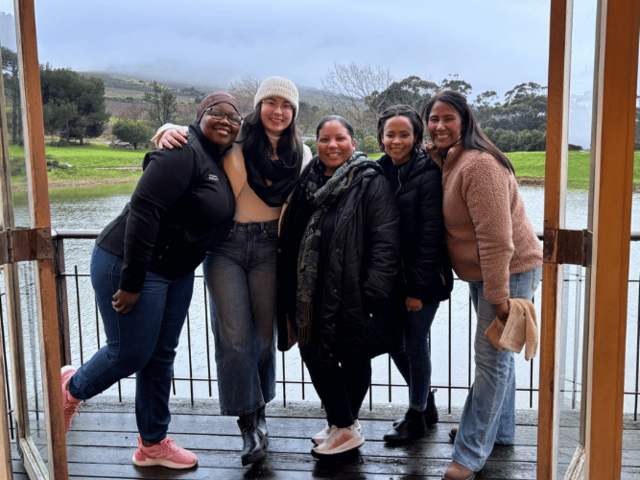
Nkhensani highlights that environmental management, while being technical, is also deeply collaborative.
It involves working with government departments, environmental consultants, specialists, communities and stakeholders, and internal project teams. Each of these groups brings a different perspective, and aligning them requires ongoing engagement and communication.
“It’s not just about your relationship with government. The people you’ve worked with over the years become just as important.”
Professional networks play an important role, whether it’s sharing knowledge or tools, accessing the right expertise, or learning from others’ experience. Maintaining strong relationships across the industry helps create more effective and informed project outcomes.
Early engagement is particularly valuable. Bringing stakeholders into the process from the outset allows for more constructive conversations and helps identify potential concerns before they become constraints later on.
Getting it right from the start
One of the most important lessons from her experience is the value of early-stage planning.
JUWI has increasingly focused on conducting site sensitivity assessments at the beginning of a project. This involves engaging specialists early to understand the environmental context and identify potential challenges upfront.
“You can spend a lot of time on a site before certain constraints become clear, so we now focus on understanding those from the get-go.”
This approach allows teams to make more informed decisions about site selection, design and feasibility before significant time and resources are committed.
Selecting the right specialists is also key. Experience in the relevant region, familiarity with local stakeholders, and an understanding of specific environmental issues can make a meaningful difference to how smoothly a project progresses. This is particularly important in a country like South Africa, where regional context matters. Different provinces, municipalities and even individual case officers can approach projects in very different ways, which means no two projects are ever quite the same.
In practice, good environmental management is proactive. It’s about anticipating challenges, engaging early, and designing projects with their environmental context in mind.
A different way of thinking about the energy transition
For Earth Day, Nkhensani’s message to the world is this:
Sustainable development depends on collaboration.
While different stakeholders may come to the table with different priorities, the end goal is shared. We all want a country we can be proud of – one that protects its natural heritage and communities while embracing clean, renewable energy for future generations.
Developers, government departments, environmental consultants, specialists and communities all have a role to play, and the best outcomes are achieved when these groups work together from the outset.
“We all need to work together… developers, government, environmental consultants, communities, specialists. That’s how we make development work, but in a sustainable way.”
As South Africa continues to expand its renewable energy capacity, this kind of approach will become increasingly important.
At JUWI, it’s an approach shaped by years of working on complex projects across different environments, where getting the balance right is part of delivering projects responsibly.
Because the transition is not only about building more clean energy, but about doing so in a way that is thoughtful, balanced, and grounded in the realities of the environments in which these projects are developed.